Blood Preparedness for Tomorrow's Biomedical Scientists
What can future biomedical scientists do if the blood bank runs out of blood and a patient needs a transfusion? If they know how, they can use fresh whole blood. This was the key message when the Norwegian Centre for Blood Preparedness (Nokblod) visited the Western Norway University of Applied Sciences in January to teach biomedical science students.
Published 6/3/2026
Last updated 9/30/2026
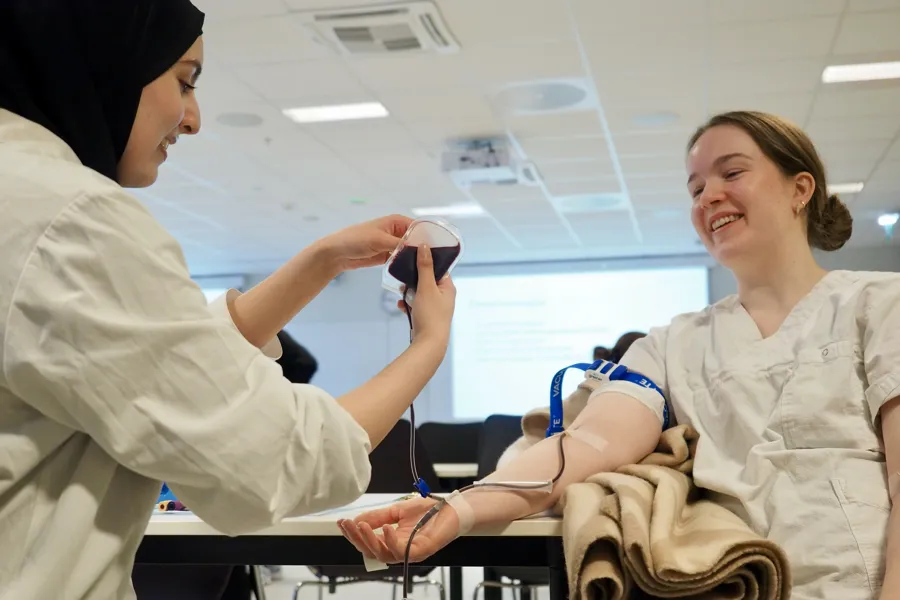
No one can predict what future crises await tomorrow's healthcare professionals, but we do know that patients with severe haemorrhage will require blood products, regardless of the circumstances. As the first biomedical science students in Norway to receive this training, they participated in two days of practical and theoretical instruction in blood preparedness provided by Nokblod.
The practical skills taught during the course are tailored to situations that healthcare professionals may encounter during disasters, power outages, or in settings without access to laboratory facilities. These skills can be applied almost anywhere, including in ambulances, emergency departments, or at the scene of an accident.
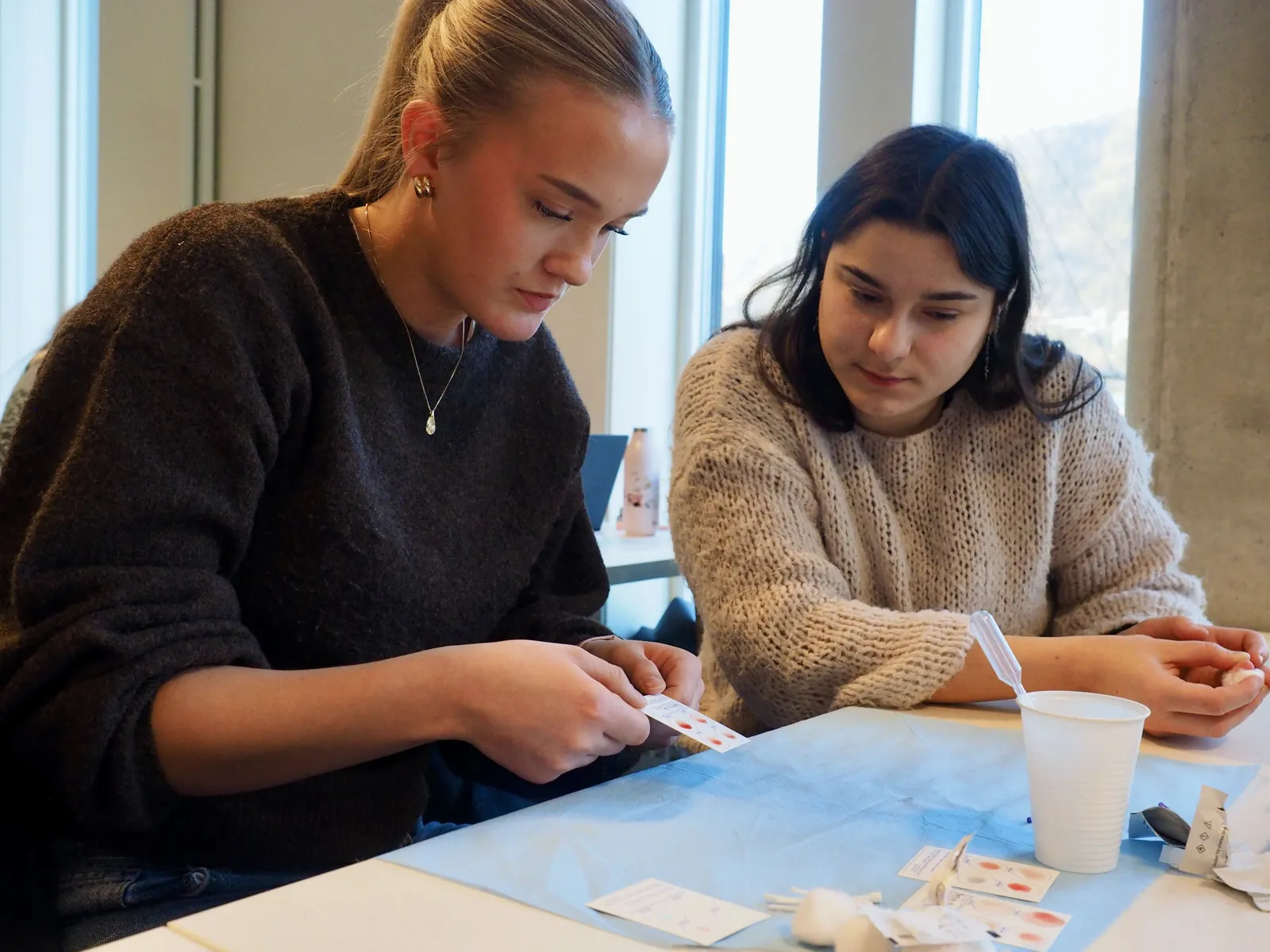
The students analysed their own blood samples to determine their blood types using EldonCards. This simple rapid test requires minimal equipment, no electricity, and can help healthcare providers determine a donor's blood type in crisis or disaster settings where standard laboratory procedures are unavailable.
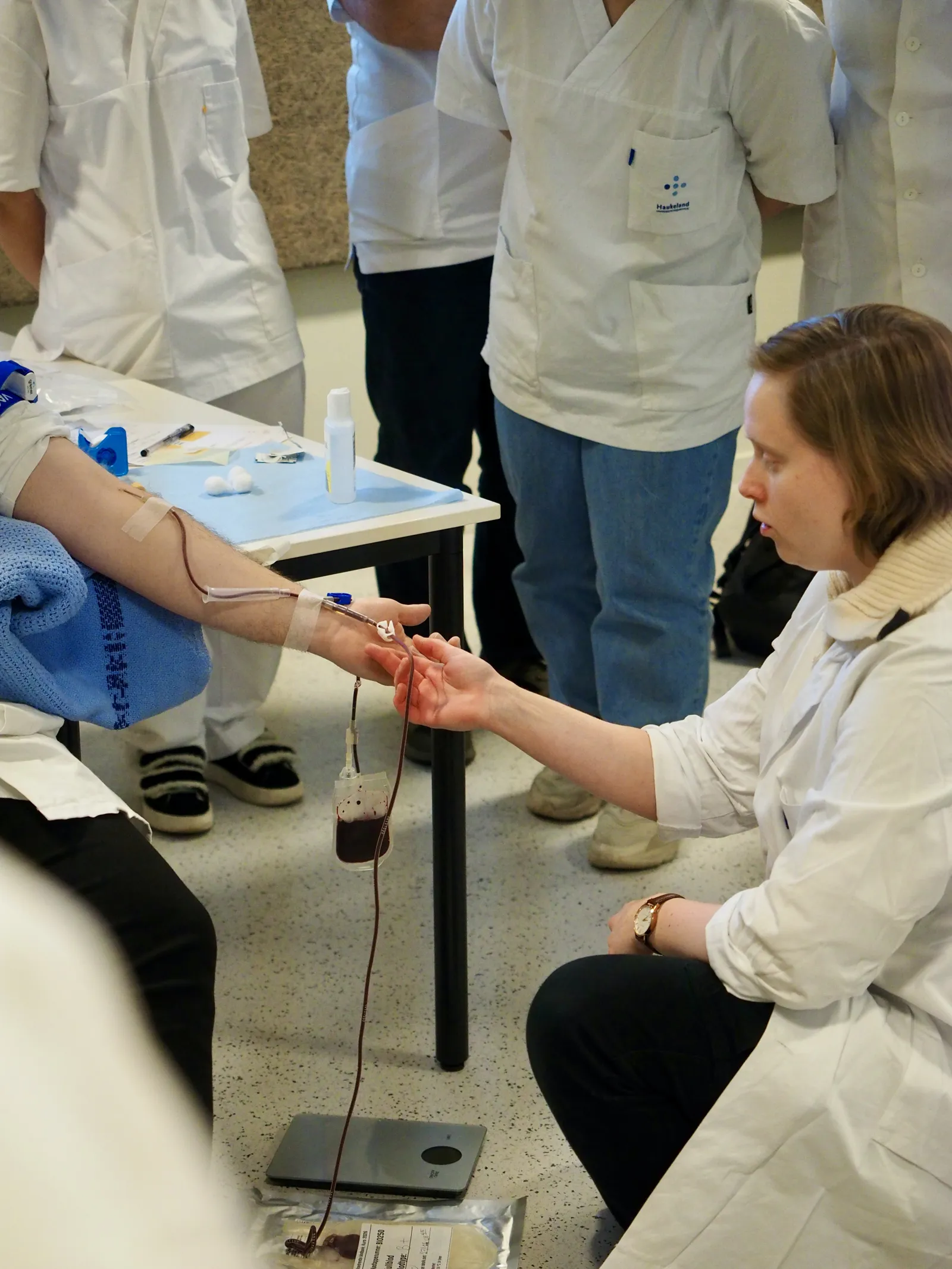
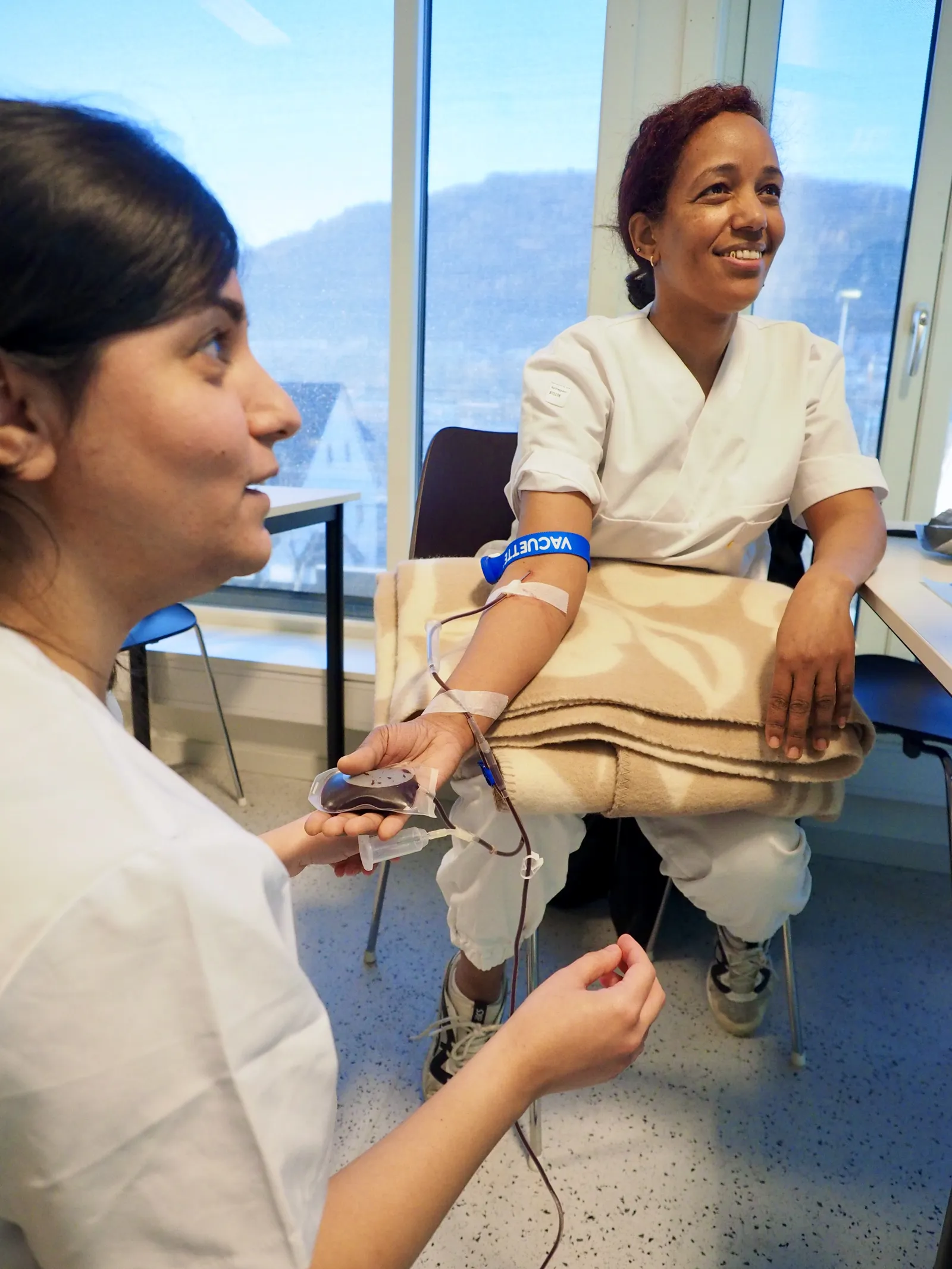
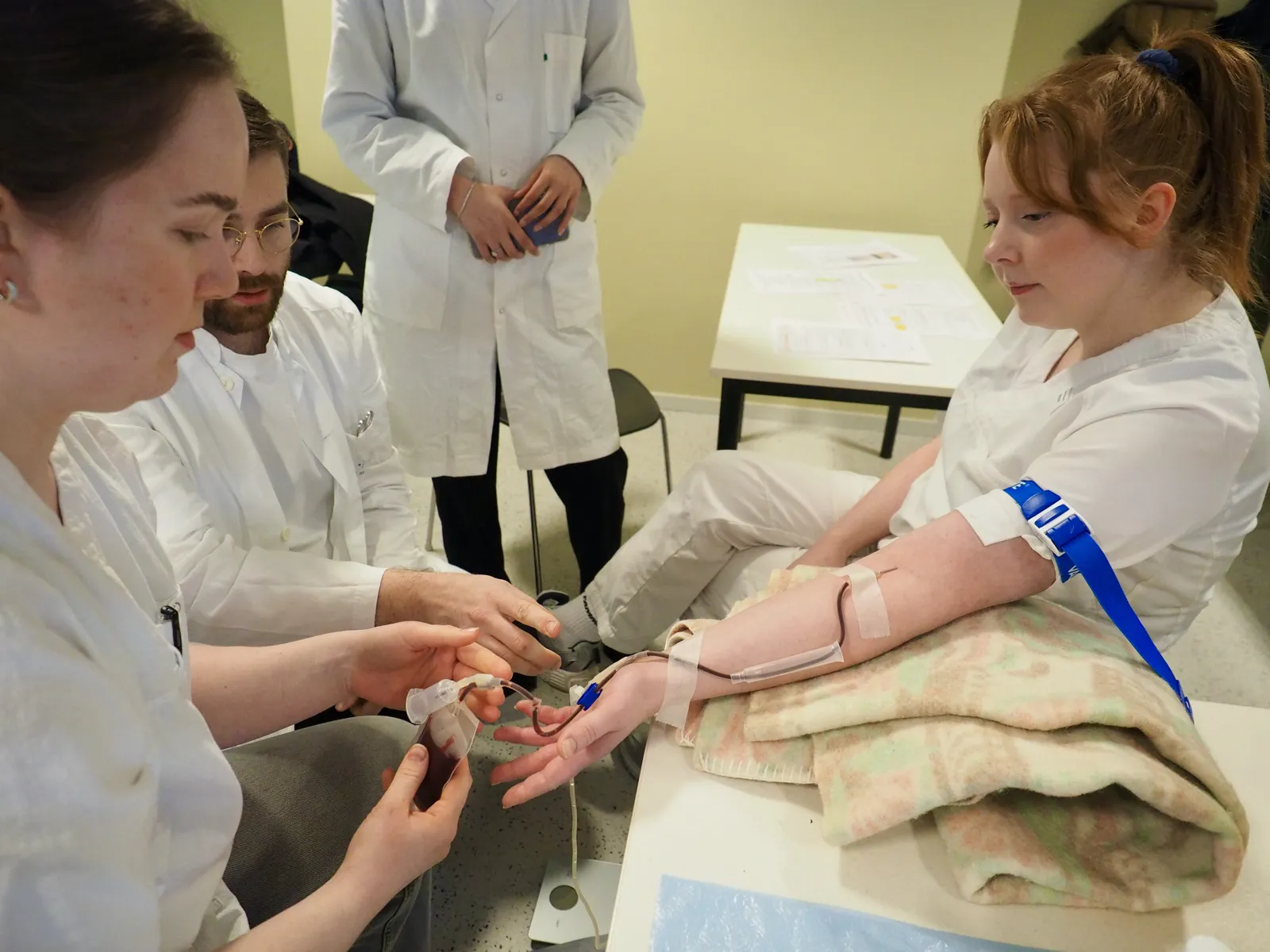
The next step was to practise collecting fresh whole blood. The students collected blood from one another, not a full unit, but enough to familiarise themselves with all steps of the procedure. This included collecting blood samples and sealing the tubing by tying knots rather than using an electric tube-sealing device.
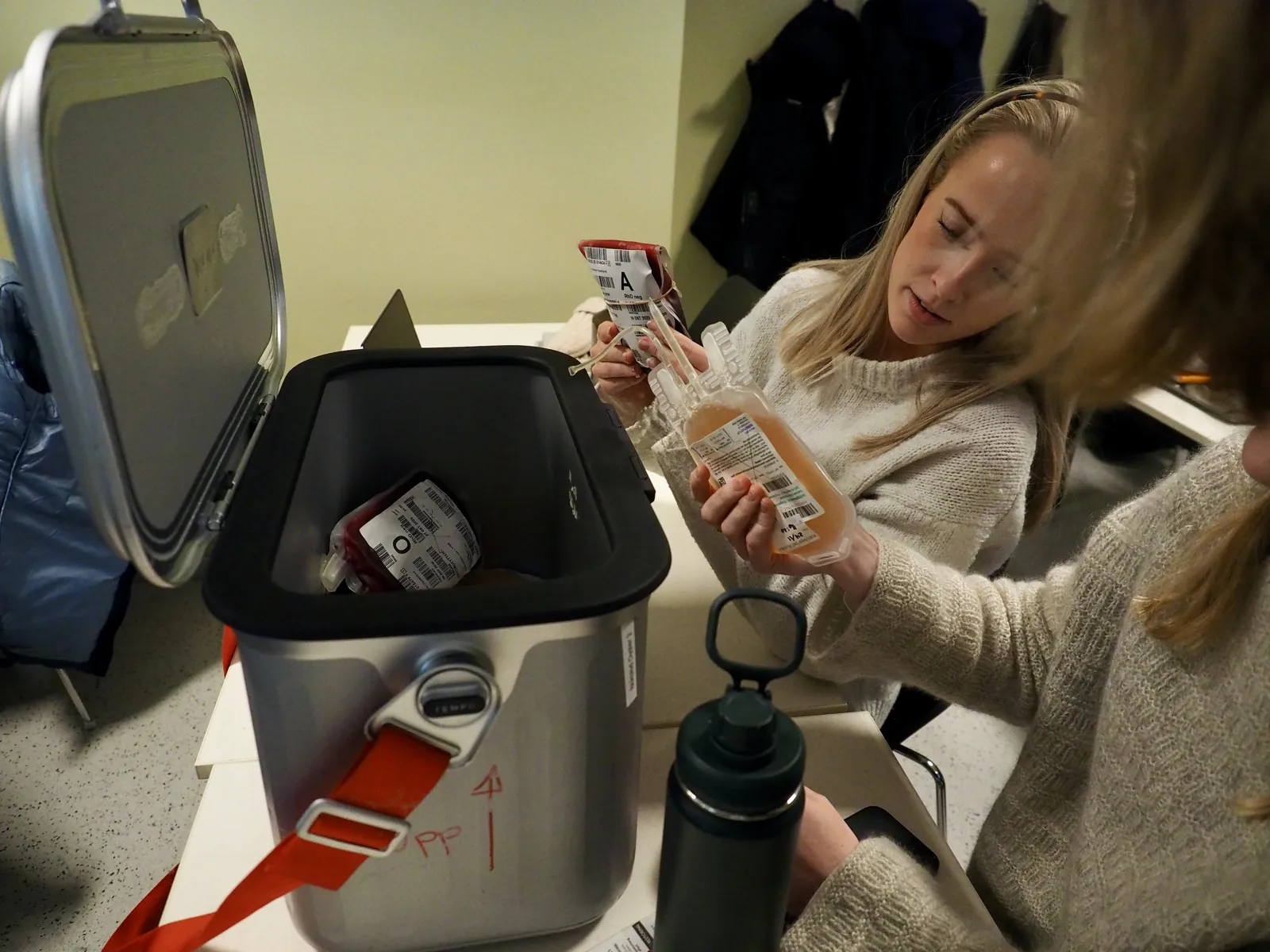
Finally, the students learned how to prepare blood bags for transfusion. Connecting a transfusion set, priming the line, and initiating a transfusion are normally tasks performed by nurses. However, in emergency situations it is important that biomedical scientists are also able to perform these procedures in order to reduce the workload of other healthcare staff.
The two-day Nokblod course was integrated into the students' curriculum in transfusion medicine. By incorporating blood preparedness into the study programme, as the Western Norway University of Applied Sciences has done, the university is taking an important step towards ensuring that future biomedical scientists are better prepared for future crises.
Would you like to learn more about emergency blood transfusion and blood preparedness? Explore our educational resources here.
Image 1/6
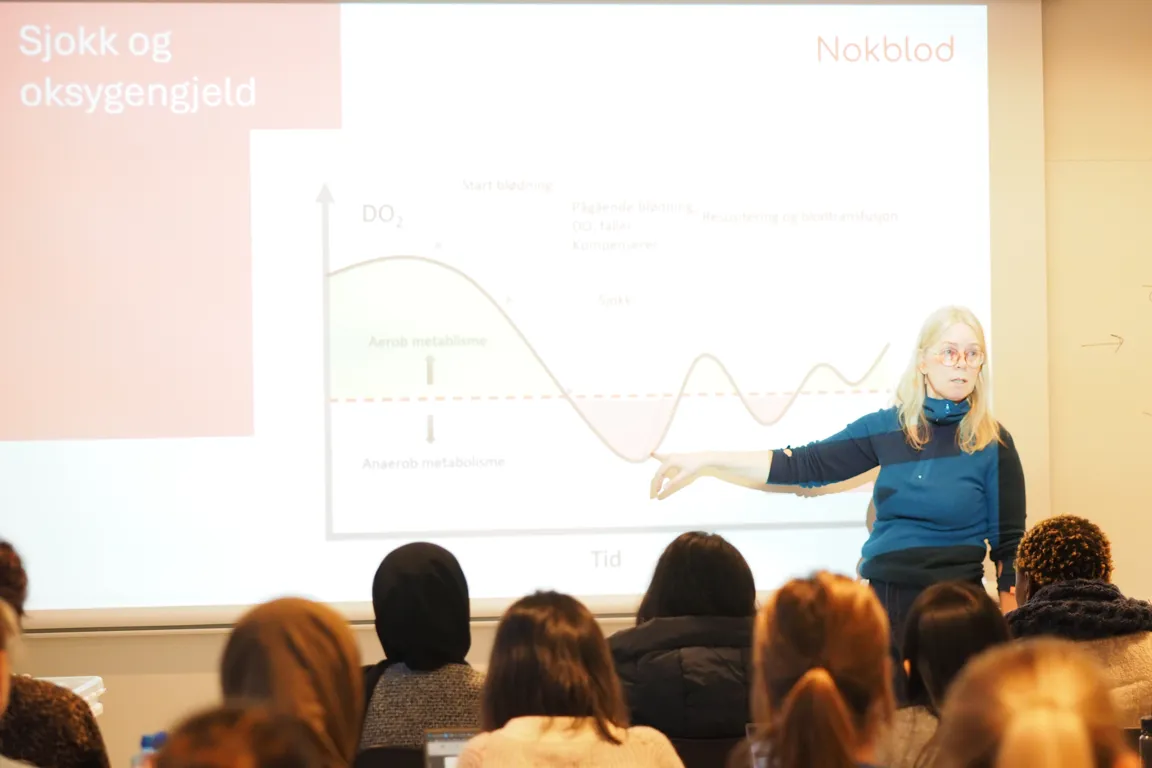
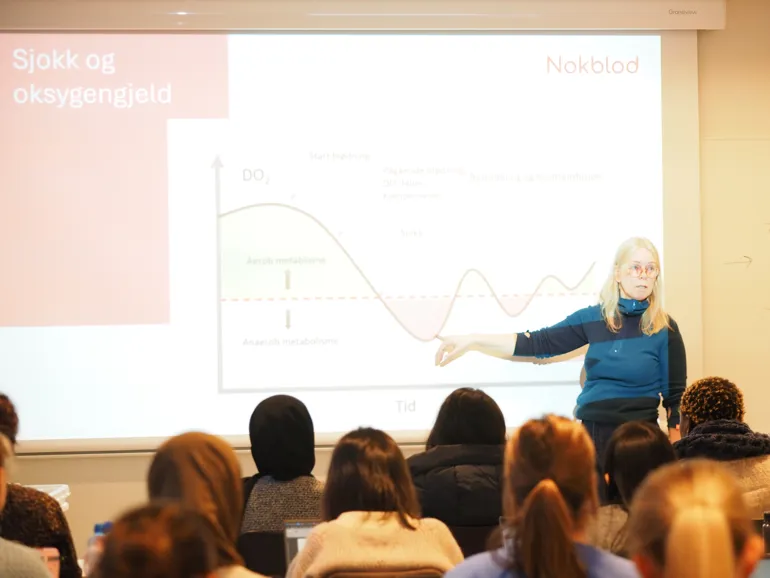
Director of Nokblod, Torunn Apelseth, lectures students on hypovolaemic shock and oxygen debt.
Photo: M-H. W. Gelink
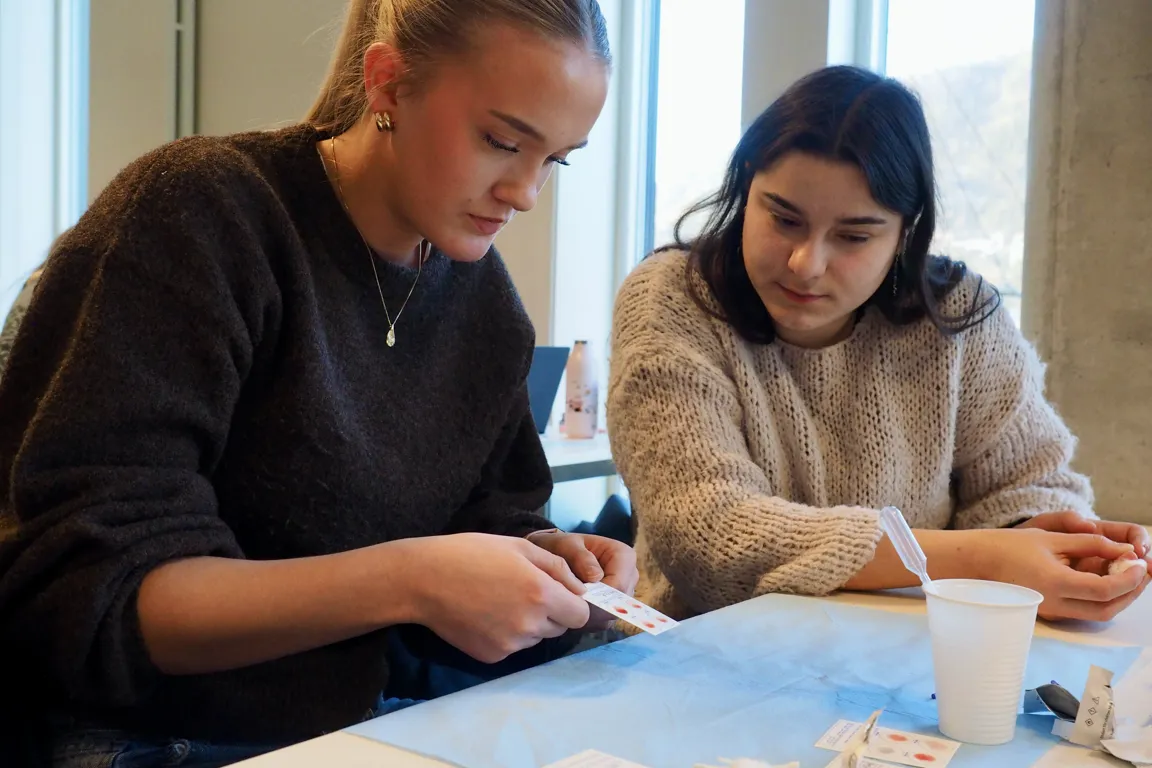
Biomedical science students Bertine (left) and Ekaterina (right) use EldonCards to determine each other's blood types.
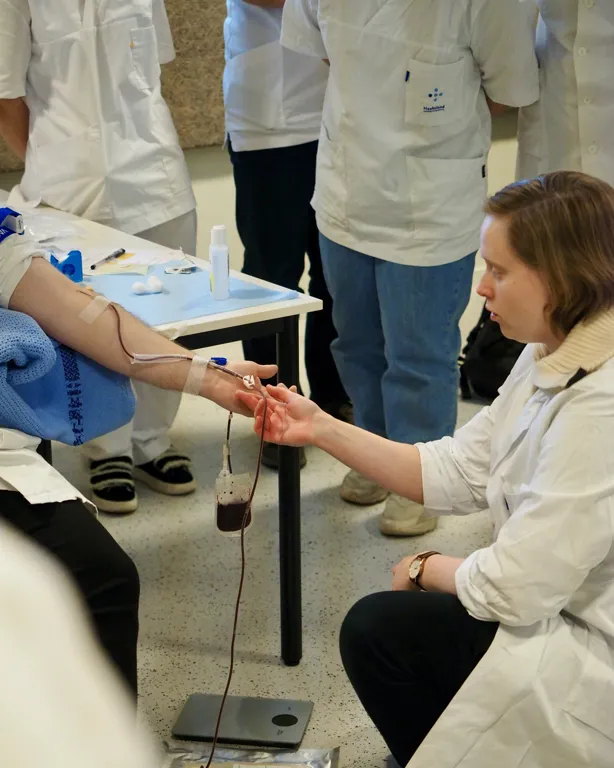
Biomedical scientists Idunn and Svein demonstrate the emergency whole blood collection procedure.
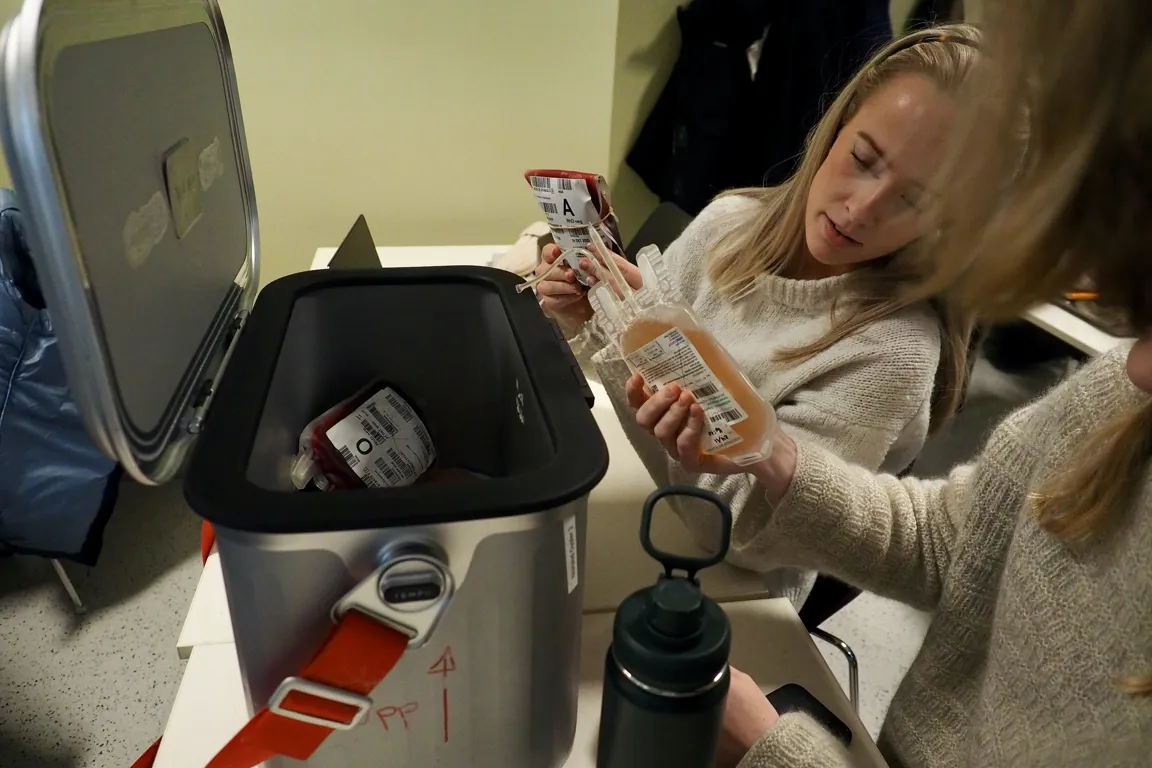
Biomedical science students examine different blood products and transport containers.
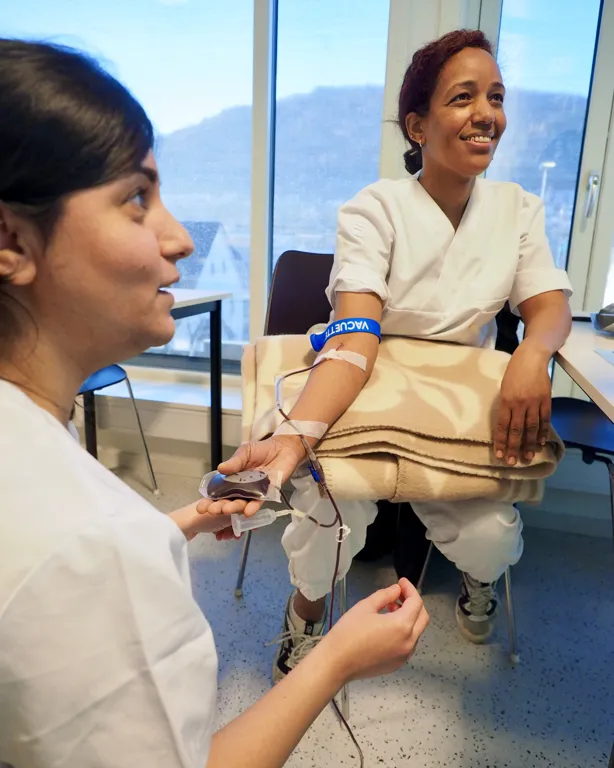
Student Elham (left) practises emergency whole blood collection on fellow student Tsigireda (right).
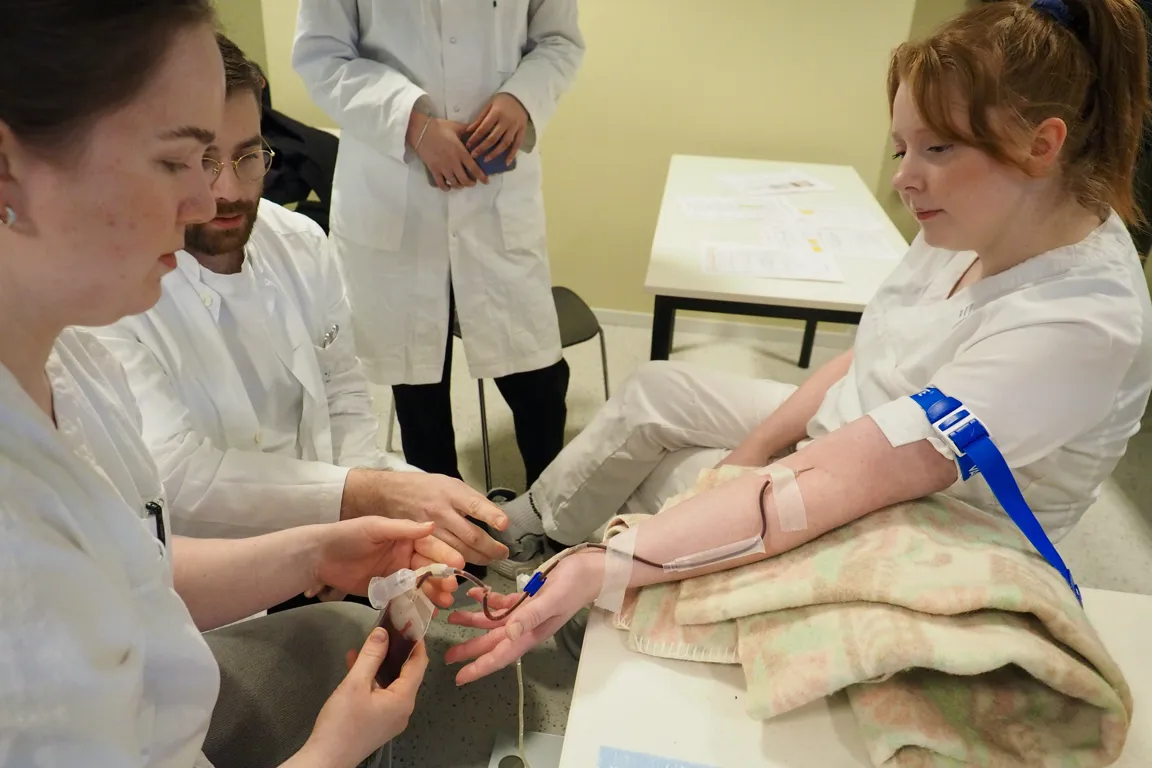
vein from Nokblod guides Maria as she performs an emergency whole blood collection procedure on fellow student Marit.
Further reading on this subject