Hyperbaric Cell Lab
The Hyperbaric Cell Lab is a research group in diving medicine, focusing mostly on cellular and biomolecular responses to exposures relevant for diving. In diving, our main focus is professional diving, both in-shore and off-shore. The Hyperbaric Cell Lab is also an infrastructure for hyperbaric exposure of cell- and tissue cultures for in vitro or ex vivo modeling of diving.
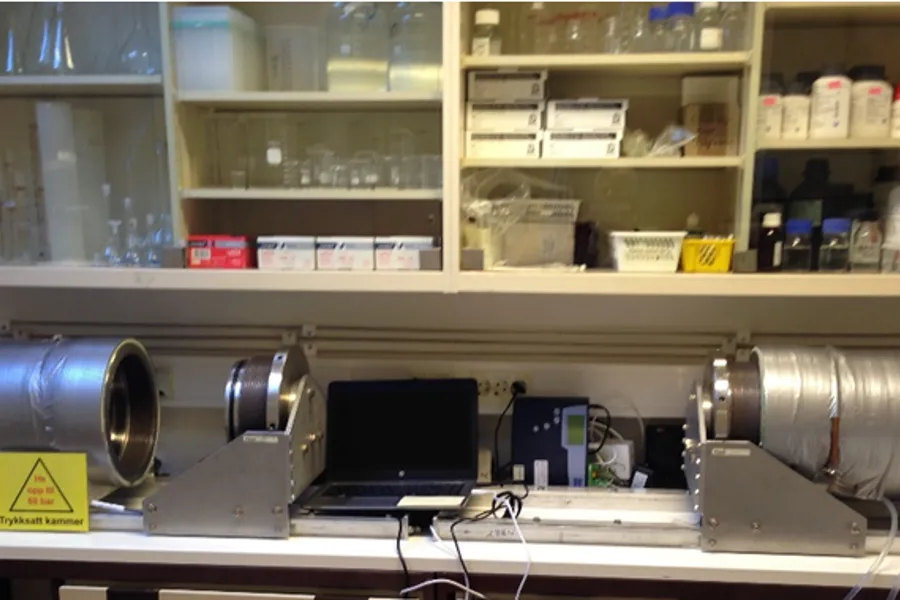
The overall aim of our research activity is safer diving and improved clinical services – acute treatment of decompression sickness and occupational health assessment of professional divers. We contribute to researcher education in diving medicine for medical students, master students, PhD- and postdoctoral fellows. Together with expert colleagues at the department of occupational medicine, we contribute with knowledge-based diving medical advice on diving and diving procedures.
Our research
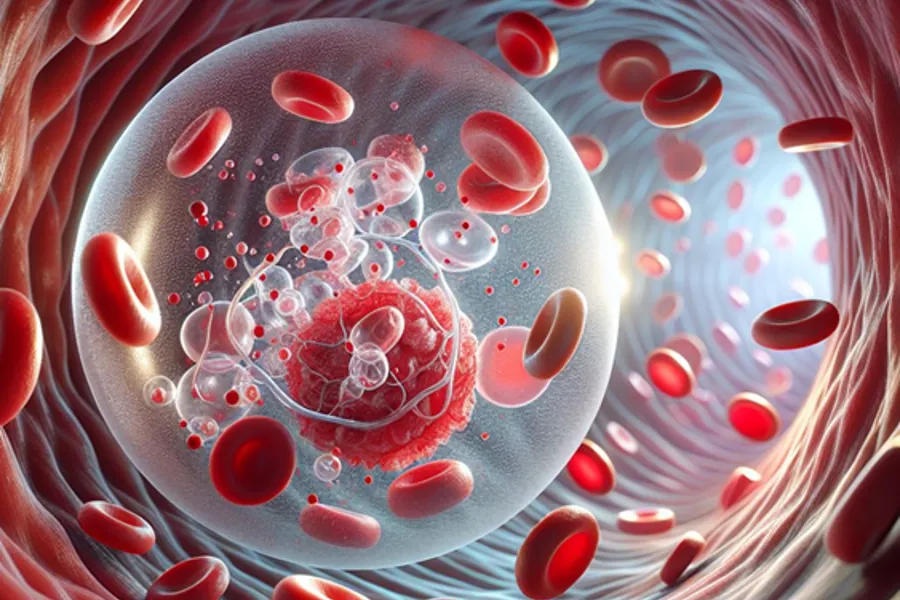
During diving the physical environments changes quite substantially, particularly pressure, dissolved oxygen and inert gas levels. We are interested in understanding how these changes affect biological processes and contribute to natural adaptation and acclimatization to diving and to pathophysiological developments.
Currently our main research focus is on the cardiovascular system and the central nervous system. We are interested in how cellular signaling and metabolic processes respond to diving, and we use both experimental and computational approaches to address this. The group performs research relating to many aspects of diving medicine, such as; natural adaptive mechanisms to diving, the development of biomarkers to diving-related stress, pathophysiological mechanisms, and treatment of diving-related conditions. We are also interested in underlying causes of individual variation in these aspects and how this may be assessed.
Our largest project in diving medicine is currently the Joint Industry Project, which is funded by several offshore companies through Offshore Norway. The project supports the development of baromedicine and clinical diving medicine in Norway and the education of researchers and physicians in diving medicine. The project is performed in close collaboration with the Barophysiology research group at NTNU. Read more about the project here.
The research group
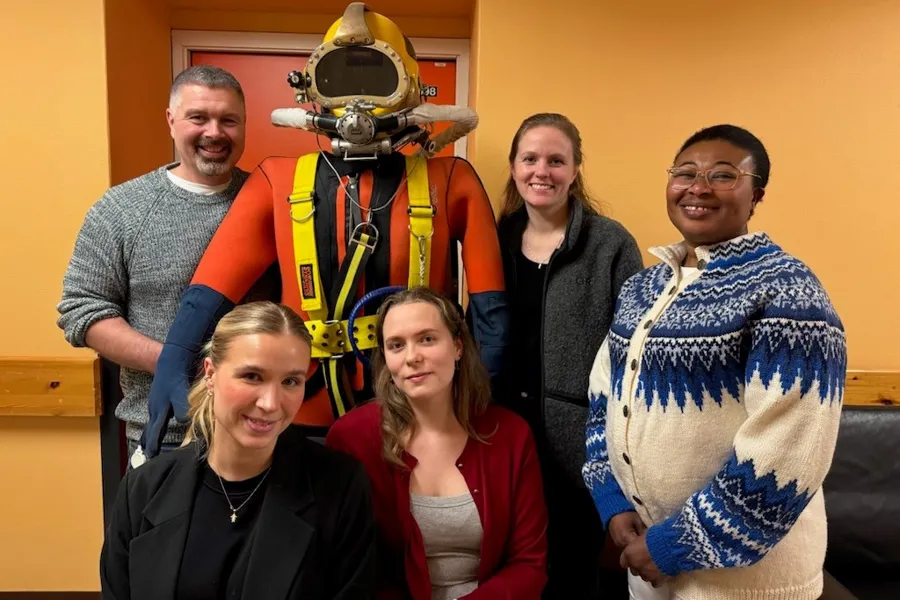
Permanent staff
Rune Kleppe (group leader)
Christine Tewa Toffa Komano (bioengineer)
Temporary staff
Ragnhild Marie Mellingen (researcher)
Linnea Vie Løkeland (master student, molecular biology)
Andrea Haugen (master student, pharmacy)
Medical students, thesis projects
Julie Terkelsen & Fatima Ebrahim
Rebekka Margrete Lervik & John Haugnæss
External collaborators
Norwegian University for Technical and Natural Sciences (NTNU), Norway
Ingrid Eftedal (Dept. of Circulation and Medical Imaging)
University of Bergen (UiB), Norway
Anders Goksøyr & Odd André Karlsen (Dept. of Biosciences)
Jan Haavik (Dept. of Biomedicine)
Lars Herfindal (Dept. of Clinical Science)
Aurora Martinez (Dept. of Biomedicine)
Frode Selheim (Dept. of Biomedicine)
Knut Teigen (Dept. of Biomedicine)
Nordland Hospital Trust, Bodø, Norway
Benjamin Stage Storm (Norwegian Complement Research Group)
Renathe Henriksen Grønli (NCRG)
Tom Eirik Mollnes (NCGR)
University of Stavanger, Norway
Peter Ruoff (Dept. Chemistry, Bioscience and Environmental engineering)
University of Western Brittany
François Guerrero (Orphy lab)
Michael Theron (Orphy lab)