Presentation of digital treatment tools for ADHD and gastrointestinal conditions at the conference DigitalHealth26
DigitalHealth26 brought together more than 500 participants in Bergen on May 27–28, with a broad program highlighting research, innovation, and user involvement in the development of future healthcare services.
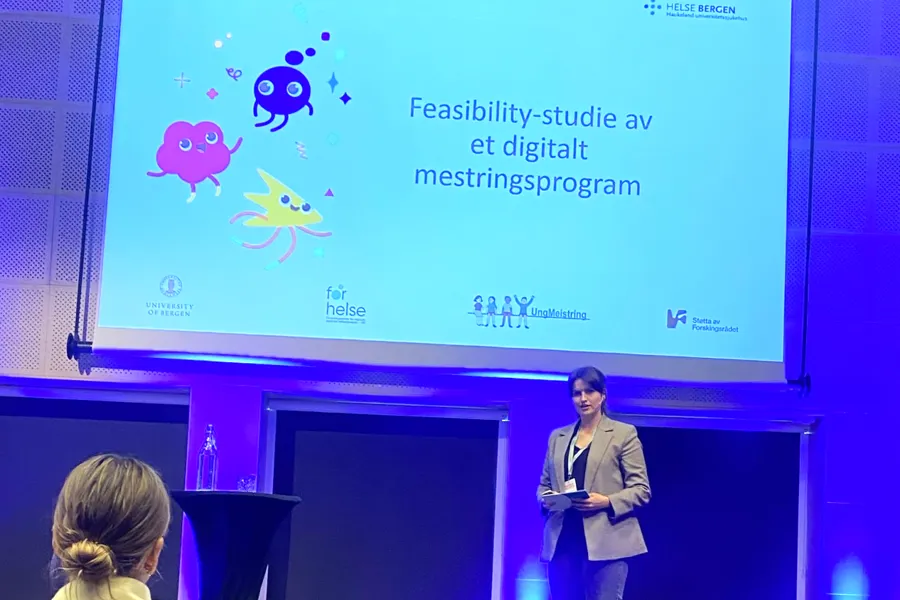
Among the contributors were several representatives affiliated with the Centre for Research-Based Innovation in Digital Health Services (Forhelse), who presented the Centre with contributions from both the research front and the user perspective.
PhD candidate from Forhelse’s UngMeistring project, Maren R. Storetvedt (photo above), contributed to the program with perspectives from ongoing research and development work in digital health services. Together with other Forhelse representatives, she showcased the breadth of the center’s work, ranging from implementation and technology development to the interaction between research and practice. Storetvedt presented preliminary analyses of the digital intervention ADA for adolescents with ADHD aged 13–16, which will be implemented in Child and Adolescent Psychiatric Clinic this autumn.
PhD candidate Camilla Thuen, from Forhelse’s partner the Gastrointestinal School (Mage-tarmskolen) at the National Competence Center of Functional Gastrointestinal Disorders at Haukeland University Hospital, presented perspectives on how digital treatment programs can contribute to more sustainable healthcare services for patients with irritable bowel syndrome (IBS). Thuen showed how the digital treatment program at the Gastrointestinal School (Mage-tarmskolen) can be an effective and scalable offering, but emphasized that further work is needed on how to support patients digitally and ensure that the service is offered at the right time.

Stine Hope Spjeld contributed with experiences from user involvement in mental health. As head of the experiential panel for mental health and substance use at Helse Bergen, and with a background from Forhelse, she demonstrated how patient and caregiver perspectives can be integrated into research and service development. This reflected the conference’s clear emphasis on user involvement as a key driver of innovation.

DigitalHealth26 placed particular focus on how digital solutions can address shared challenges in the healthcare sector, with themes such as organizational development, ethics, preparedness, and cross-sector collaboration. The contributions from Spjeld, Thuen, and Storetvedt illustrated how Forhelse plays an important role in this landscape—both by developing new knowledge and by ensuring that the voices of users are heard.
The conference thus confirmed Forhelse’s position as a key contributor to the development of future digital health services in Norway.