Doctoral thesis shows that ADHD patients can benefit from digital treatment.
Researcher at Forhelse Emilie Sektnan Nordby defended her PhD thesis at the University of Bergen on January 17, 2025 with the thesis “Digital interventions for adults with ADHD. Development, feasibility, adherence, and the participants’ experiences.”
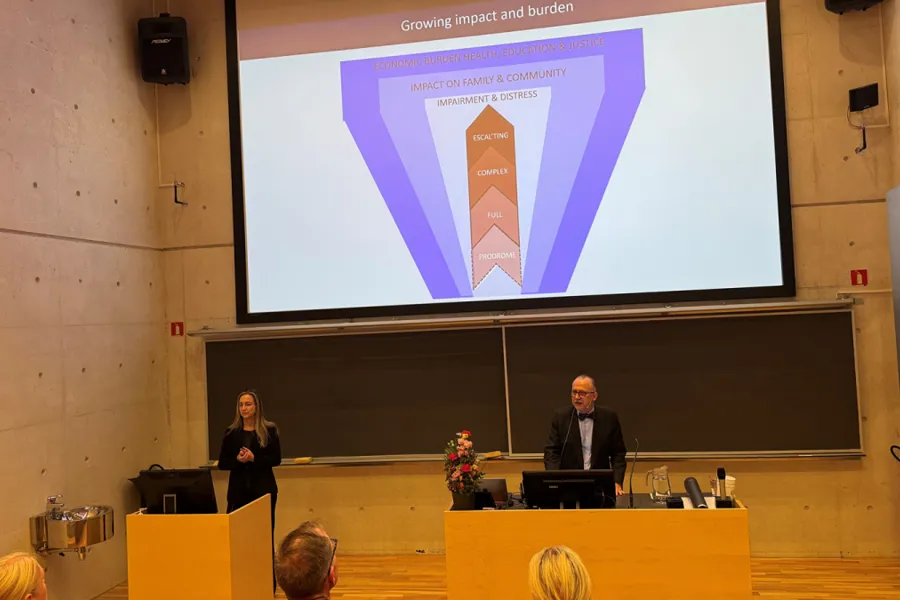
Researcher at Forhelse Emilie Sektnan Nordby defended her PhD thesis at the University of Bergen on January 17, 2025 with the thesis “Digital interventions for adults with ADHD. Development, feasibility, adherence, and the participants’ experiences.”
Many adults with ADHD would like a more comprehensive treatment option, consisting of both medication and psychological support. Yet access to such psychological services varies considerably. In her doctoral thesis, Nordby has investigated whether digital interventions, both as fully digital solutions and combined with face-to-face follow-up, can help adults with ADHD.
The doctoral thesis examines two digital interventions for adults with ADHD through four studies, where both interventions are developed in collaboration with the target group. The first two studies come from the INTROMAT project (precursor to the Center for Health) and MinADHD, a digital self-help program for adults with ADHD. The last two studies in the doctoral project examine ERIA, a combined digital and group-based program for emotional regulation difficulties in adults with ADHD.

Committee chair Associate Professor Rune Raudeberg, Department of Biological and Medical Psychology, Faculty of Psychology, University of Bergen. Second opponent: Professor Lisa B. Thorell, Department of Clinical Neuroscience, Karolinska Institutet. Doctoral student Emilie Sektnan Norby, Helse Bergen and UiB. Supervisor: Professor Lin Sørensen, Department of Biological and Medical Psychology, Faculty of Psychology, University of Bergen.
Overall, the findings from the doctoral work show that adults with ADHD can benefit from digital solutions. There was a high level of satisfaction with the digital interventions, and there was an improvement in the primary goals of the interventions at group level. The findings also provided valuable insight into the participants’ own experiences of change and what factors they felt contributed to this.
Emilie Sektnan Nordby trained as a psychologist at the University of Bergen and now works at the Forhelse research center at Haukeland University Hospital. Here she is congratulated by Tine Nordgreen (right), head of the center Forhelse
Professor Astri J. Lundervold has been the main supervisor and Professor Frode Guribye has been the secondary supervisor for Emilie Nordby’s doctoral thesis. The doctorate was funded by Helse Vest research funds.
