Opportunities and challenges related to the introduction of digital treatment options
At this year's Alrek Health Days 2025, the question was asked whether we are moving towards using science, or whether we are developing services and initiatives in spite of what we already know. Alrek Health Days presented over 20 events across 7 thematic tracks.
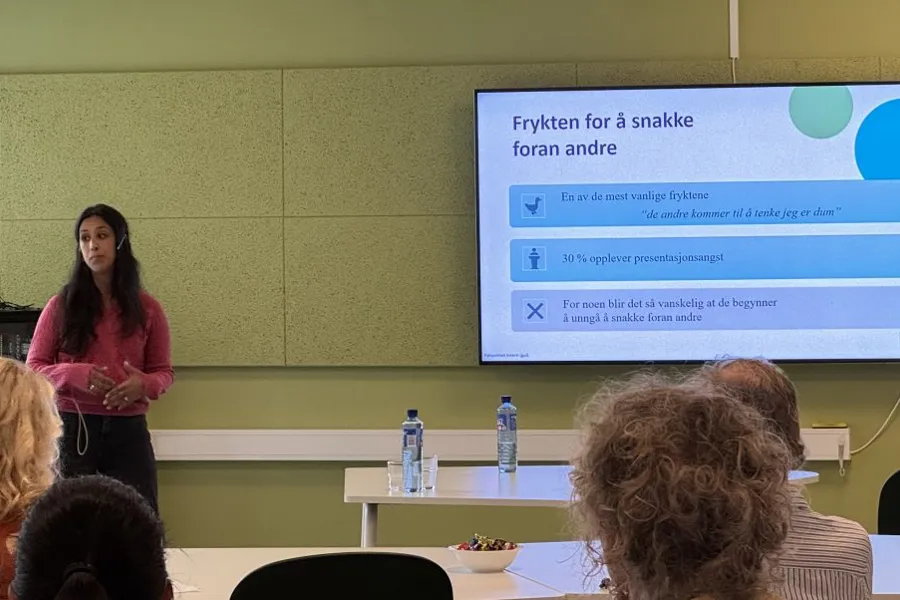
The conference invited debate and input on how we can make use of knowledge, and implement it - faster and better
than today.

Researchers from the Research Center for Digital Mental Health Services presented on the topic of introducingdigital health services for people with anxiety, depression, panic disorder and ADHD. The participating researchers
were Iris Brunner, Reidar Nævdal, Smiti Kahlon and Aleksander Heltne.
The researchers from Forhelse said that every year, mental disorders affect more than one million people in Norway and 700 million people globally. These amounts are accounting for 13% of the total disease burden. Yet only 20-30%
of those affected in Norway receive mental health services. To address this unmet need, digital psychological interventions have been proposed as an evidence-based, effective and accessible alternative or supplement to traditional face-to-face treatment.
Research shows that such digital offerings, such as internet-based cognitive behavioral therapy, can be as effective as face-to-face therapy for several disorders, including anxiety, depression and panic disorder. At the conference,
the researchers presented examples from e-treatment in Bergen, and discussed the opportunities and challenges associated with the implementation of digital treatment services in mental health.
Forhelse's research focuses on how to ensure quality, patient safety and broad accessibility in the face of an increasingly digital health service.