in Norwegian
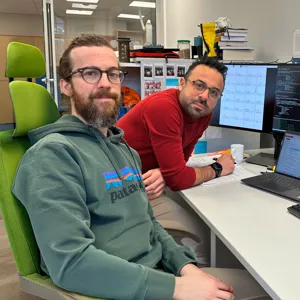
Node leaders: Gonzalo S. Nido and Dimitrios Kleftogiannis
Dr. Gonzalo S. Nido is a senior researcher in computational biology at the University of Bergen, with more than a decade of experience in the analysis of multiomic datasets, including genomics, epigenomics, transcriptomics, and proteomics, as well as single-cell omics, and data integration. His work has made important advances, particularly in the field of PD transcriptomics.
Dr. Dimitrios Kleftogiannis is a senior bioinformatician at the University of Bergen. His work focuses on the development and application of computational approaches to dissect omics datasets from Next Generation Sequencing (NGS), as well as mass cytometry (CyTOF) and imaging mass cytometry (IMC) technologies. He is also interested in the application of machine learning for biomarker discoveries in multiple sclerosis.
Systems medicine is central to the Centre’sapproach, enabling integrated analysis of complex neurodegenerative and neuroinflammatory diseases. By combining large multimodal datasets from clinical and translational activities with advanced analytical models, including AI, the SBB Node develops sensitive biomarker systems. These tools support earlier and more accurate diagnosis, patient stratification, and prediction of treatment response.
Recent advances:
The ParkOme Initiative: Integrates multiomics and clinicopathological data to understand Parkinson’s disease (PD) and discover biomarkers and treatment targets. This involves mapping data layers (genome, epigenome, transcriptome, etc.) and using high-throughput single-cell analyses, pathology-guided single-cell transcriptomics, and Xenium spatial transcriptomics.
Multiple Sclerosis Single-Cell Omics: Combines single-cell, bulk omics, and clinicopathological data to define immune mechanisms across MS subtypes. This expands immune phenotyping across CSF and blood compartments, identifying disease- and treatmentassociated immune states and functional programs using advanced machine learning algorithms. Highdimensional cytometry, single-cell transcriptomics, and bulk RNA-seq are applied to patients receiving therapies such as rituximab and aHSCT, supporting patient-centric treatment strategies. The group also contributes to large-scale international initiatives, including the 3TR consortium, where the UiB has provided samples for CyTOF and bulk RNA-seq and participates in the core bioinformatics working group.
Recent key milestones:
- Single-Nucleus RNA Sequencing: Applied to nearly 250,000 nuclei from individuals with atypical parkinsonisms (PSP and CBD), identifying novel cell-specific gene expression changes.
- PD Stratification: Identified two PD subtypes based on neuronal respiratory complex I deficiency, with distinct molecular and clinical profiles.
- Transcriptome Mapping: Mapped the full transcriptome of over 1300 brains from neurodegenerative disease patients, with a publication under current review in the Brain journal and a public database.
- MS Single-Cell Analysis: Collected and analysed more than 200 million single cells from MS participants in the SMART-MS, RAM-MS, and OVERLORD-MS clinical trials. Using advanced computational and systems biology approaches, this work characterises immune reconstitution, longitudinal cell-state transitions, and therapy-associated functional programs at single-cell resolution.
- Funding and Platforms: Funding was secured to investigate peripheral blood immunological signatures in MS and establish a multimodal omics analysis platform. Newly awarded grants have extended this framework to include integrated CSF and blood analyses, enabling systematic cross-compartment comparisons of immune states and functional programs relevant to disease activity and treatment response. The new 10X Xenium high-resolution spatial transcriptomics platform was acquired and will be ready to be used in 2026.
The node’s data, analyses, and computational software have led to several publications in high-impact journals and presentations at major international conferences, garnering significant interest and recognition.