In Norwegian
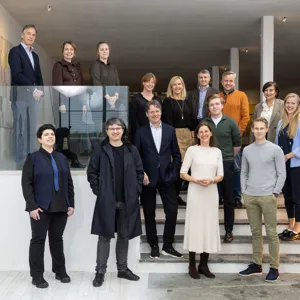
Node leader: Charalampos Tzoulis
Charalampos Tzoulis, MD, PhD, is an internationally recognized expert in movement disorders and neurodegeneration who holds the position of professor of neurology and neurogenetics at the University of Bergen and Haukeland University Hospital, Bergen, Norway. He is Director of the Neuro-SysMed Centre, and the K.G. Jebsen Centre for Translational Research in Parkinson’s disease. He is also Director for the newly established Mohn Center for Neuroprotection and ICoN: Innovation Center for Neuroresilience, a center for research-driven innovation (SFI). Professor Tzoulis leads the research group DECODE-PD.
The PD Node is globally acknowledged for implementing full-cycle translation – from the laboratory to the bedside and back – and is now being recognized for groundbreaking and ambitious strategies to develop and test PD therapies. These include two multi-arm multi-stage platform trials, the establishment of the first Norwegian cohort of individuals in prodromal stages of neurodegenerative diseases, and a growing focus towards prevention (all detailed below). The Node’s work has constituted the foundation for multiple clinical trials across neurodegenerative diseases at the Centre and across the globe. Moreover, the PD Node’s strong credibility has attracted growing interest from organizations and companies worldwide, which are establishing clinical trial collaborations through funding and scientific contributions.
Node activities
Basic and translational research at the PD Node has nominated mitochondrial function, redox biology, and other metabolic processes as promising therapeutic targets primarily for PD and, by extension, other neurodegenerative and neuroinflammatory disorders, including Alzheimer’s disease, ALS, and MS. Inspired by these findings, the PD Node conducts multiple clinical trials of NAD-replenishment therapy, with a broad range of objectives ranging from establishing safety and pharmacokinetic profiles, to determining the optimal biological dose for brain diseases, and testing efficacy in delaying or preventing PD and other parkinsonisms. This research has inspired and triggered several other NAD-replenishment trials at the Centre, targeting Alzheimer’s disease, ALS, and MS.
In addition, the PD Node is advancing a novel therapeutic strategy in Parkinson’s disease using D-serine, the right-handed optical isomer of the amino acid serine. Based on pioneering work by our collaborator Professor David Sulzer (Stanford University), demonstrating that D-serine can promote axonal/synaptic sprouting and functional re-innervation in PD models, the PD Node has initiated the D-SPARK clinical study in collaboration with Professor Sulzer and SPARK-NS, a US-based non-profit translational research organisation.
In addition, the PD Node is working actively on setting the foundations for individualised medicine in PD by running an international initiative aiming to stratify PD according to underlying molecular mechanisms and develop biomarkers for patient selection for tailored therapies. Notably, in 2025, they published results working toward in vivo biomarkers for stratification.
To enable tailored treatment, they run world-class translational research aiming to identify novel therapeutic targets and candidate therapies for PD and emerging subtypes thereof.
Furthermore, the PD Node leads and is currently establishing a multi-arm multi-stage (MAMS) platform trial for PD – one of five initiatives in the world – as well as the first ever global trial accelerator and derisking platform designed to assess target penetration and engagement of promising treatments for PD.
See an overview of the clinical studies on the page PD and clinical studies.
You might also be interested in the article: Isolated REM Sleep Behavior Disorder – A Unique Opportunity for Prevention in Parkinson’s Disease