We recommend that you upgrade to the latest version of your browser.

What happens when you arrive at the Emergency department?

Here you will find information about what usually happens in the Emergency department, until you are admitted or can go home.
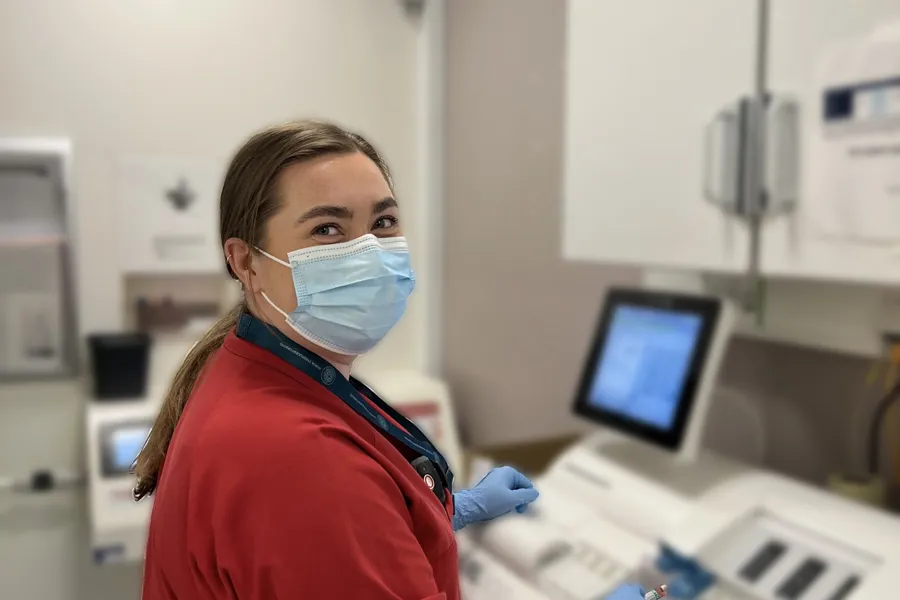
A woman wearing a mask and a red shirt in a room with white cabinets and a computer

Shortly after your arrival in the Emergency department, a health care professional will do an initial assessment of you. Based on your symptoms and clinical condition (pulse, blood pressure, among others), you will receive a triage priority. 

Patients with a high triage priority require immediate treatment and will be seen by a doctor and nurse in a private room.

Other patients with a lower triage priority may have to wait for an available nurse and doctor. Sometimes you may wait in the triage area, while at other times you will be asked to wait in the waiting room.   

After initial assessment, you may have to wait for a while before being moved to an examination room. A doctor and nurse will examine you, and do blood tests, ECG, urine samles etc, as needed. 

Examinations such as X-rays or CT scans can often be carried out in the Emergency department, and if you need medical treatment, such as antibiotics or other medicines, these can be initiated in the Emergency Department as well.   

After examination, the doctor will determine whether you need to be admitted to the hospital or not. If you are admitted, you will be transferred to a ward in the hospital.  

If you do not require admission to a hospital ward, you will be discharged directly from the Emergency department.

If your stay in the Emergency department was for a limited time, it will be considered an outpatient appointment. In this case, you will receive a text message with a payment link for co-payment for the consultation and for other examinations such as X-rays or CT scans. This does not apply if you have a health care excemtion card (frikort). 

Last updated 11/2/2026