Who benefits from digital treatment for cognitive difficulties after depression?
Many people who have been depressed and are now in remission still experience challenges with concentration, memory, planning and other cognitive functions. Such cognitive difficulties can affect daily functioning and mental health.
In order to create tailored and personalized interventions that strengthen cognitive function for this group, we need a better understanding of which characteristics can predict the benefit of the interventions.
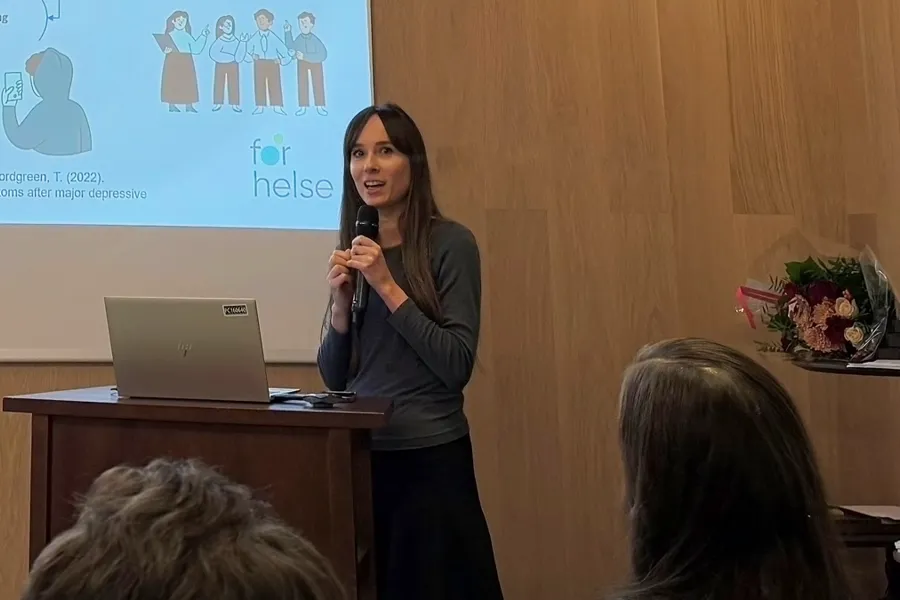
Researcher at Forhelse SFI Sunniva Brurok Myklebost (pictured) has now published an article based on a study of which factors predict improvements in cognitive functioning following digital treatment of cognitive difficulties. The article, published in the medical journal Acta Psychiatrica Scandinavica, has the original title:“Predictors of Improvement in Subjective Executive Functioning Following an Internet-Delivered Cognitive Enhancement Intervention for Adults in Remission From Depression”.
Methodology
44 adults in remission from depression participated in the study. Changes in perceived cognitive function were measured pre-treatment and six months after, using a questionnaire on executive functioning (BRIEF-A). The researchers investigated how factors such as age, history of depression and expectations of treatment affected the results.
Key findings
- The study shows that people who have been depressed for a shorter period of time had a greater improvement in cognitive function compared to those who have been depressed for a longer period of time.
- Treatment response was also influenced by high levels of expected benefit and perceived credibility.
- Those who had a partner responded better to treatment than those who did not have a partner.
The sample in the study is small, and the findings can therefore not be generalized to everyone who has been depressed. The study only measured subjective cognitive function, not objective cognitive function.

Author and co-authors of the article are:
Sunniva Brurok Myklebost, Tine Nordgreen, Eivind Haga Ronold, Aleksander Heltne, Åsa Hammar