Patch by Patch: Andrea and Stine Explore New Ways to Classify Tubular Damage
Andrea Mellingen Lothe and Stine Førde Bolme join PiV as MedTech interns. Combining backgrounds in physics and chemistry, they will continue the work of improving automated clustering of tubular damage in kidney biopsy slides.
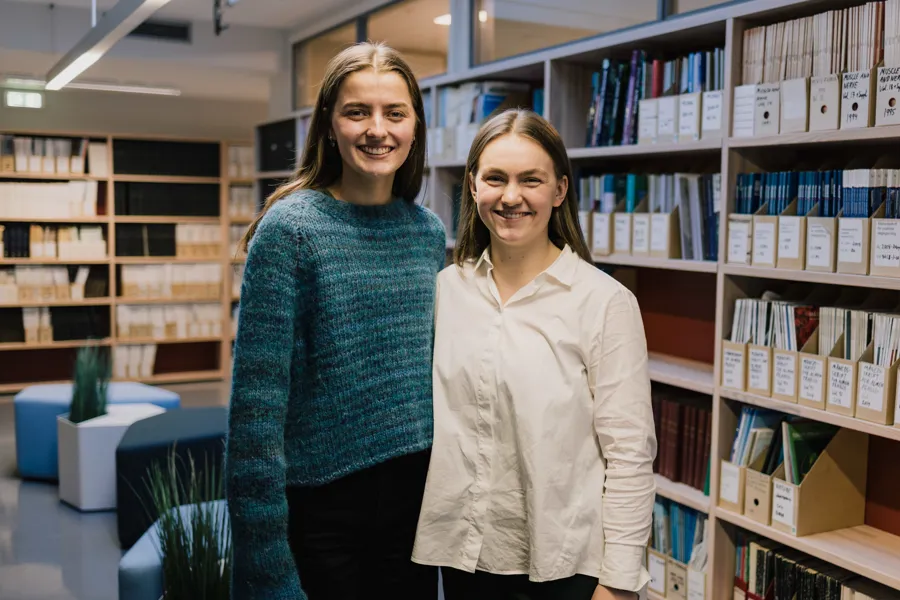
Hi! We are Andrea and Stine, and we will be the interns at PiV this spring. We are currently second year students at the Medical Technology study at the University of Bergen. In our studies we can choose between a chemistry or a physics specialization. Stine has chosen chemistry and Andrea has chosen physics. This will be a great combination for our project at PiV.
Here at PiV we are working with digital slides from biopsies of patients with chronic kidney disease. Our project is a continuation of the project from the previous interns, Anne Mari and Martine. We are trying to automatically classify different stages of tubular damage. To this, we are extracting individual images of tubules, so called “patches”. The program then extracts features which are used to make groups “clusters” of tubules with similar changes. By trying different strategies to cluster these patches we hope to find finally meaningful groupings. The previous interns already tried many different clustering methods such as DBSCAN, Leiden Clustering and Spectral clustering. We will further explore strategies to cluster these tubules and better ways to visualize the clustering, so the pathologists can analyse our results and find trends that we as non-experts can’t see.
One important part of this project is evaluating our result and measure the purity of the clustering. When we know the purity of the clustering, we can start exploring the possibility of using different parameters, features and dimensionality reduction techniques. It will be interesting to see what challenges we meet along the way! Luckily, we are surrounded by very knowledgeable and diverse group of people such as pathologists, data engineers so we know we will get good help along the way. We look forward to an interesting semester here at PiV.