From the Netherlands to Bergen: Developing AI in Nephropathology
PiV welcomes Rogier, a Dutch pathology resident and PhD candidate from Erasmus MC Rotterdam, who is interested in exploring the real‑world application of AI. He will focus on annotating and classifying glomeruli to help improve and validate PiV’s deep learning models.
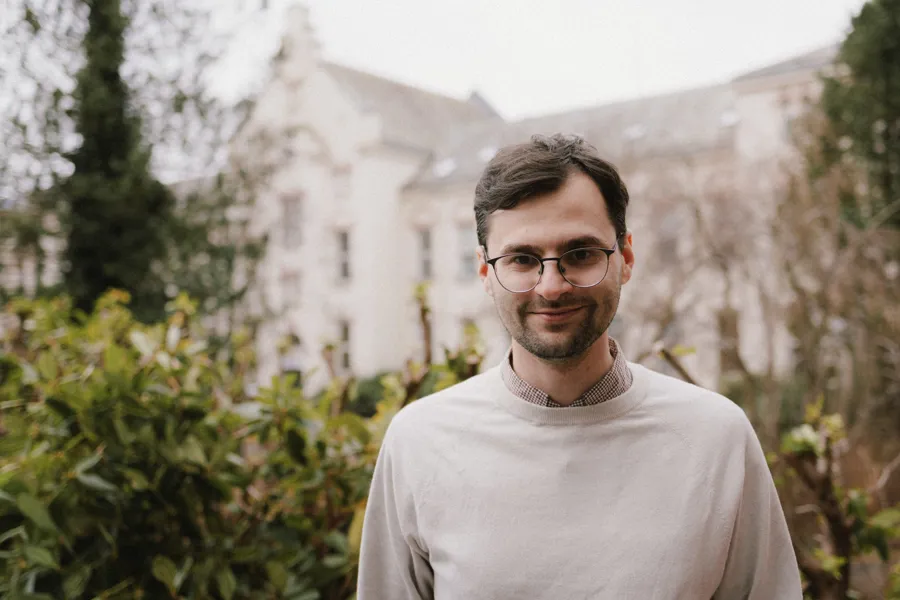
Hi! I am Rogier and I will be working with PiV from March to June 2026. I am a fourth-year pathology resident from The Netherlands, and I expect to finish my pathology training in 2027. In parallel to my pathology training, I am finalizing my PhD in bioinformatics and clinical immunology. So far during my pathology training, there has been limited exposure to AI. While AI is frequently mentioned as the future big thing, there has been limited hands-on experience. Here at PiV, I want to experience the process of AI in pathology from up close!
PiV has access to large amounts of data, including whole-image pathology slides and clinical follow-up data, from patients with various kidney disease. Pathologists organize the kidney in three compartments: (1) tubules and interstitium, (2) glomeruli and (3) vessels. Within PiV, various projects are currently being conducted on tubules and interstitium, whereas I will focus on glomeruli.
My primary task is to annotate the glomeruli on pathology images so these can be used as a ground-truth test dataset for a previously trained deep learning model. The next step is to classify the glomeruli with the histological pattern of disease. Again, this will be used as a ground-truth test set to look at the performance of the AI model for glomeruli classification.
With the help of the pathologists and data scientist of PiV, I hope to get a sneak peek of what is necessary to develop relevant AI in pathology. Moreover, I will be learning more about pathology, which is always fun!